In the Clouds: Mount Rainier When the Mountain Isn’t Out
On a sunny day in Seattle, you are more than likely to hear the beloved phrase “the mountain is out” at least once. In a state with frequent cloud cover, it’s always a bit magical when locals and visitors alike can see all 14,410 feet of Mount Rainier. Head into Mt. Rainier National Park on a clear day and the mountain is even more impressive.
Snow fields and glaciers, cascading waterfalls, and bright green valleys beneath the timberline make it a simply beautiful place. It is also impossible to truly capture Mt. Rainier’s size. To stand anywhere on the mountain will likely make you feel quite small (there are a few people in the photo below- can you spot them?!)
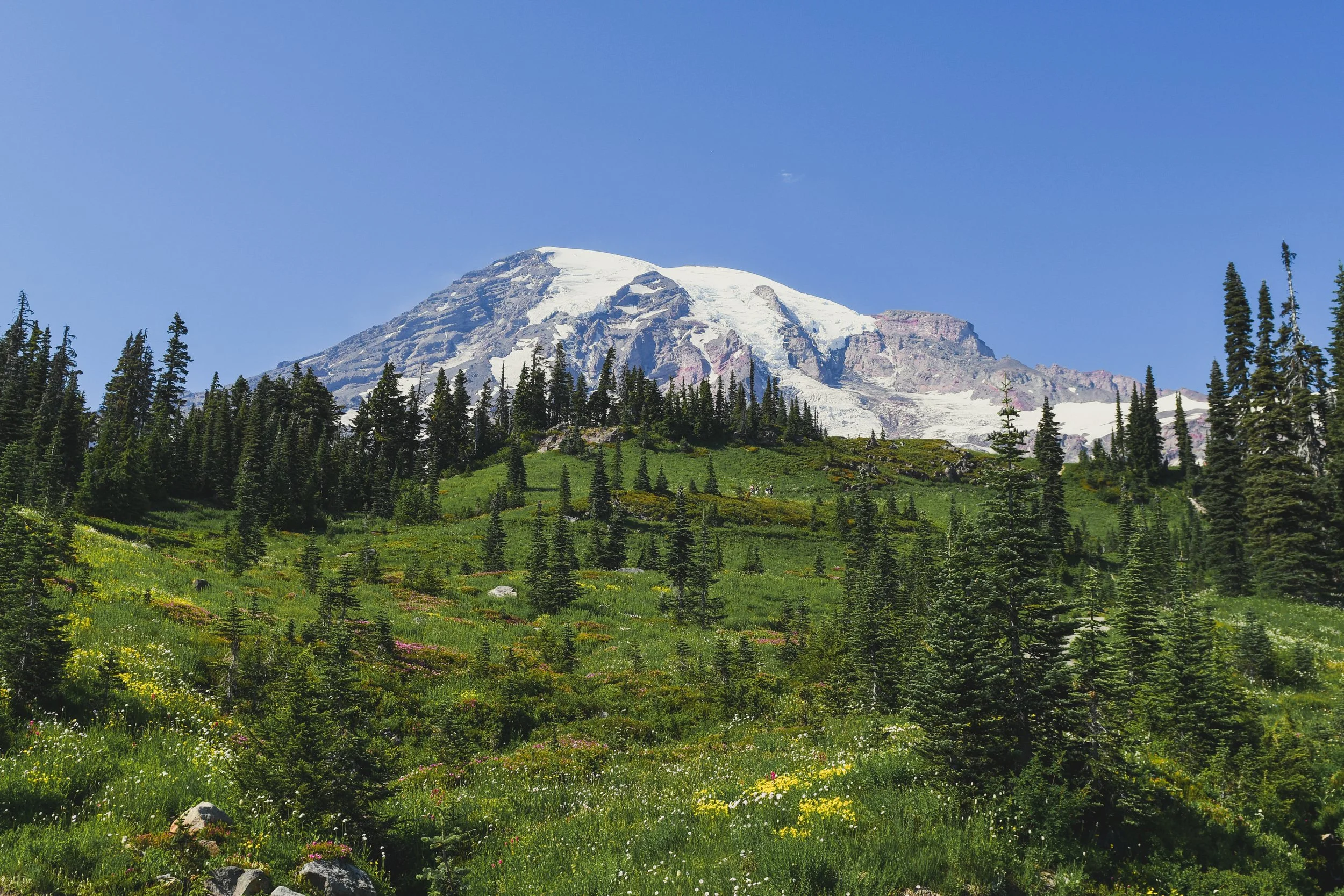
Most locals head to Mt. Rainier on a clear day. Most visitors cross their fingers that their travel plans happen to bring them to the park when the mountain is out. In the summer, it’s likely (though not a guarantee) that you’ll catch a glimpse of Tahoma in all her glory. In the Spring and Fall, it’s less likely but still possible.
However, unsurprisingly, you may arrive to the gates of Mt. Rainier without a mountain in sight. Before you turn your car around and head back to town, I’d encourage you to consider spending a day in the clouds. Mt Rainier can be an incredibly beautiful place, even cloaked in a thick blanket of fog. I live closest to the Nisqually entrance, so here are ideas for making the most of a day in the clouds on the South end of the park!
Waterfalls
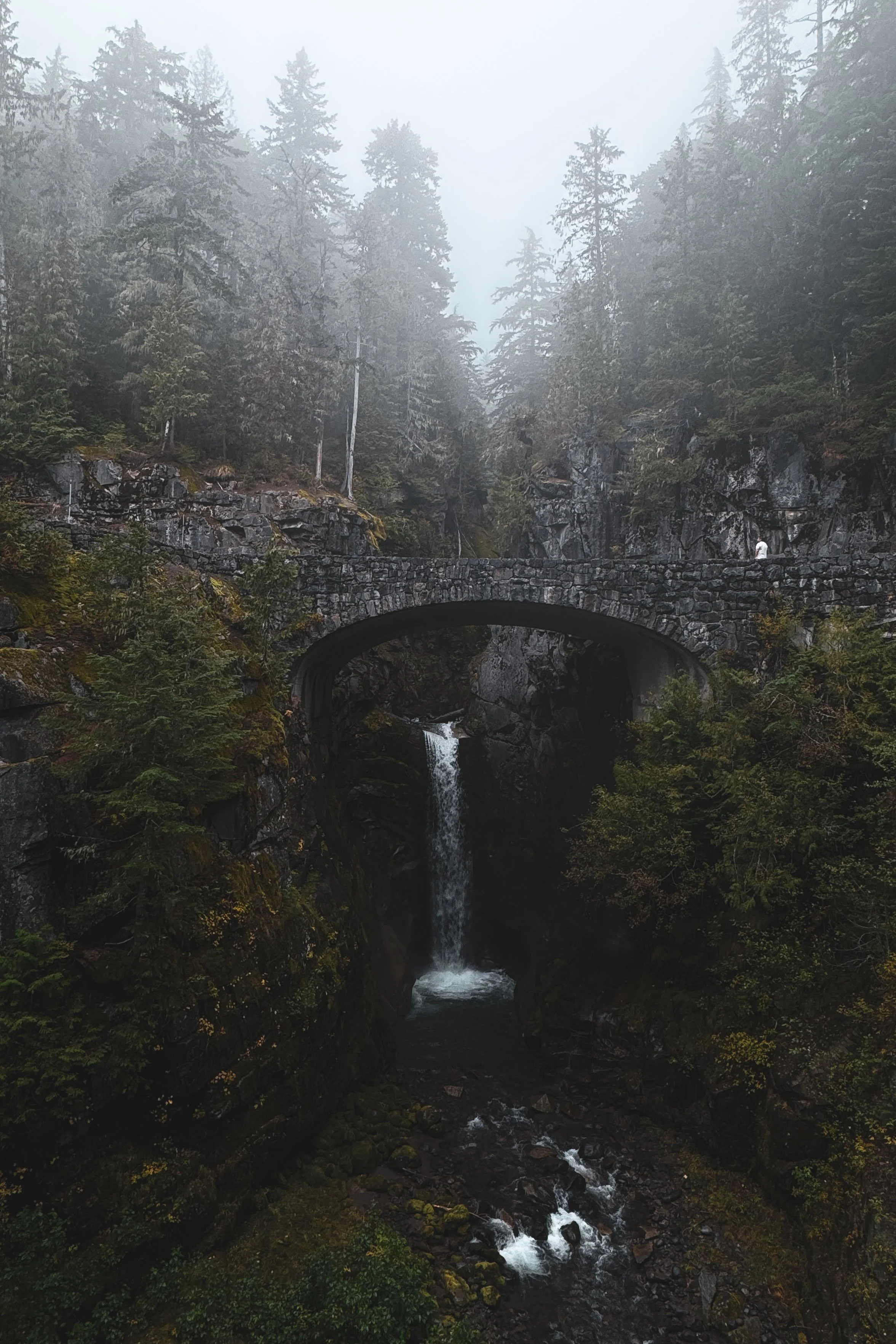
There are numerous waterfalls within the park that are especially beautiful on a misty, rainy day. Two of the easiest to get to are Christine Falls and Narada Falls. Christine Falls has a very small parking lot, so approach slowly and be prepared for pedestrians. After parking, follow the very short trail to the viewpoint (maybe a 2-3 minute walk tops). From the viewpoint, you’ll get a gorgeous view of the falls underneath the bridge. Narada Falls is another beautiful waterfall requiring a .2 mile hike (.4 round trip) that can be steep at times. While it’s not long, it can get your heart rate going on the way back to the parking lot. In cold weather, the viewpoint can get icy so be careful! Myrtle Falls is one of the more famous waterfalls in the park, partly because of the view of the mountain behind it. On a cloudy day, you may not be able to see the mountain and, depending on how thick the fog is, you may not be able to see the falls either. However, if you are nearby, willing to hike about a half mile from the parking lot, and you can see the falls, it is absolutely worth it! This area can also be incredibly icy, so approach with caution!
Rivers, Lakes, & Open Spaces
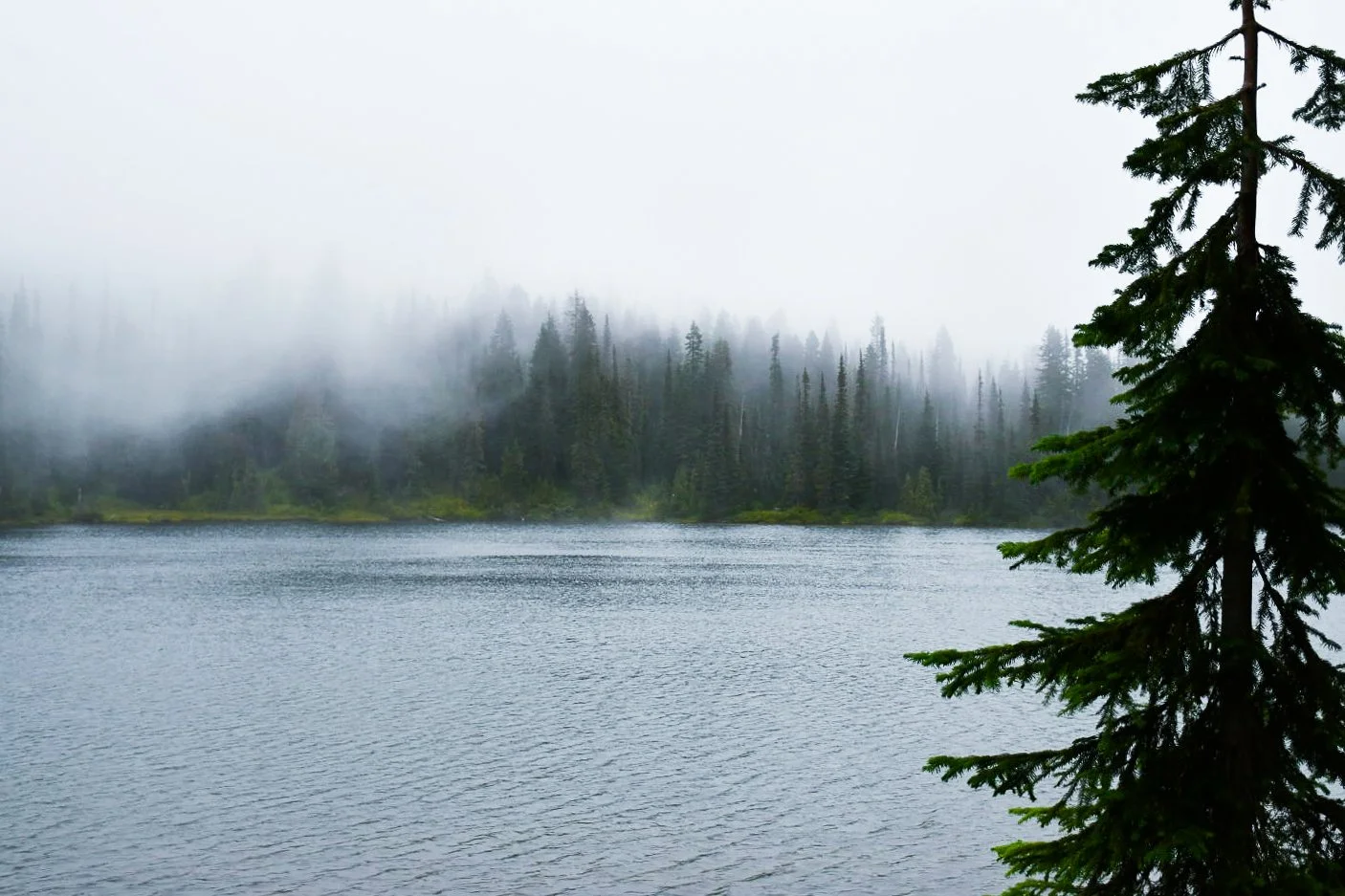
When Mount Rainier is wrapped in clouds, rivers, lakes, and other wide open spaces take on a new personality. With the fog, wind, and rain, the view shifts minute to minute and this can make for some dramatic views. There aren’t specific places I’d recommend for this, but rather, I’d encourage you to keep an eye out for possibilities. This photo was taken right next to the road- no hiking required!
Through the Forest
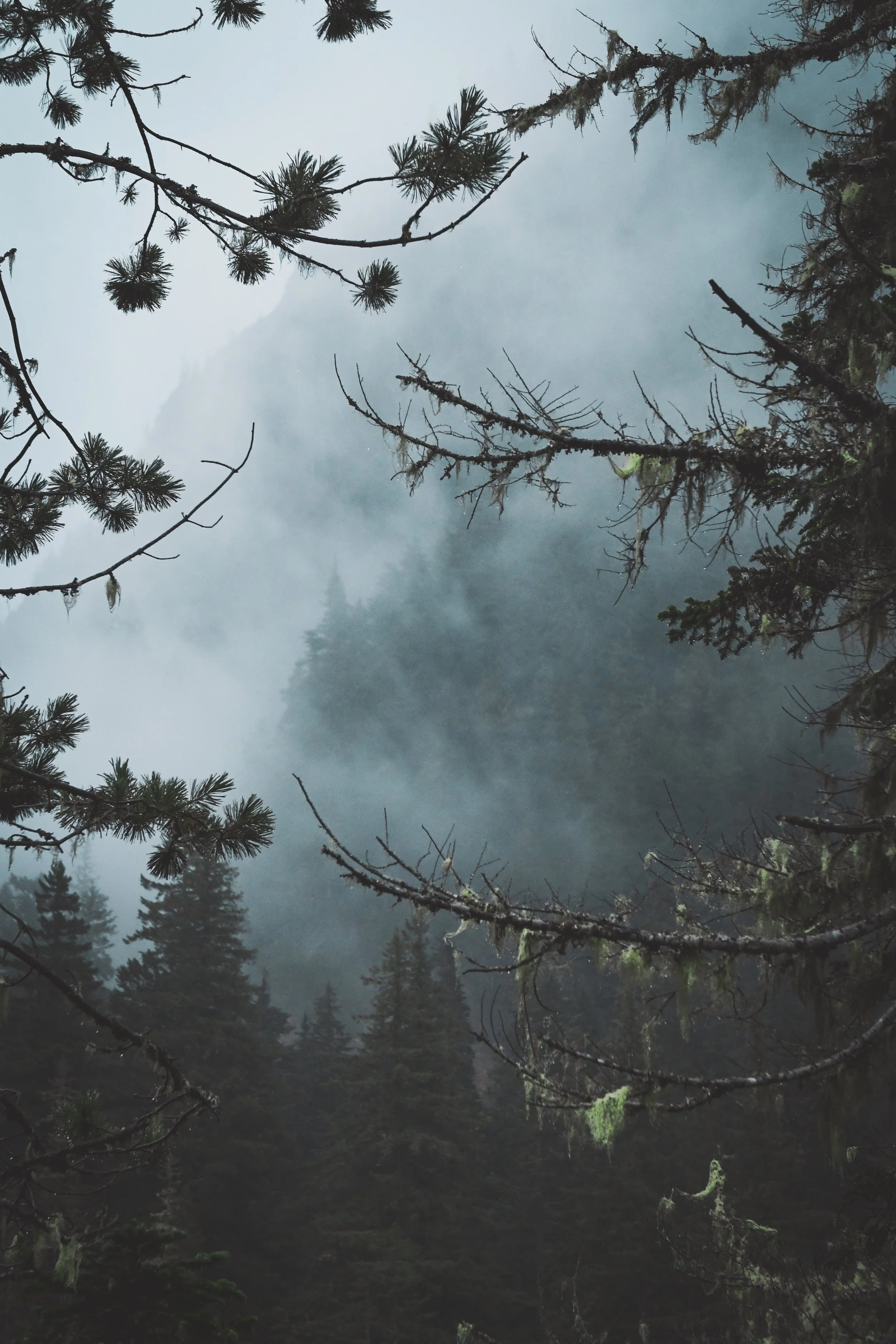
While I can understand the disappointment of not being able to see the mountain, it isn’t every day that you get a chance to walk through the clouds. Depending on the time of year, on a short stroll through the forest, you might see flowers, marmots, leaves changing colors, blue jays darting between trees, spider webs sparkling with dew drops… and more. There are so many beautiful things to see and a foggy day will force you to appreciate the small details.
If you are near Paradise, there are miles of trails starting from the parking lot. On a foggy day, I usually pick one and let myself wander slowly. Every now and then, the wind will blow and the fog will shift changing the view entirely. More than once, a foggy day turned into a clear one and I would’ve missed it if I hadn’t been willing to make the best of it!

Visitor Centers & Lodging
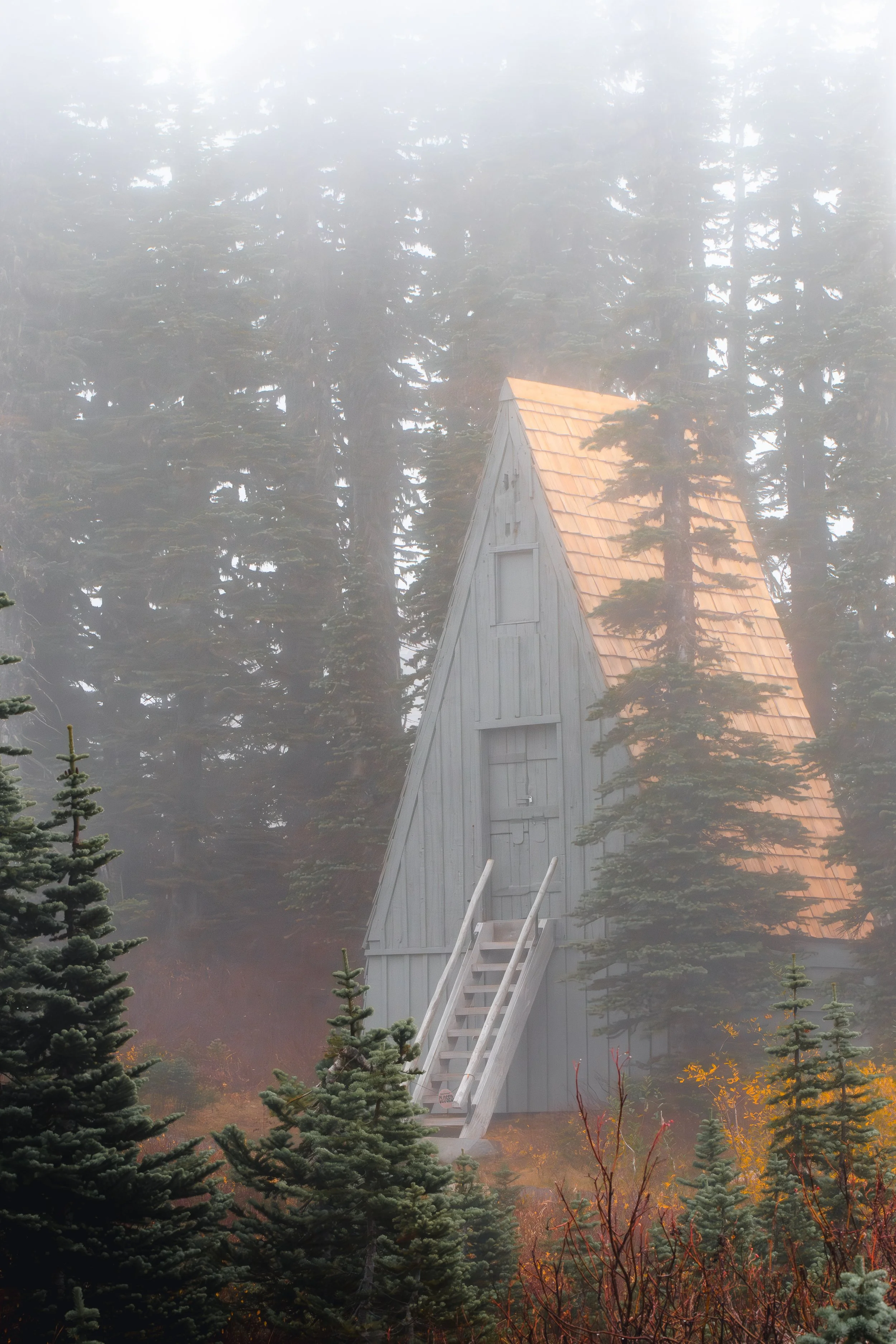
Rainy weather creates an opportunity to spend a little more time indoors. Our National Parks, Mount Rainier included, have informative visitor centers, historic buildings, and beautiful lodges. With the mountain in hiding, you won’t feel any guilt taking your time to watch an educational video, peruse a gift shop, or grab a bite to eat for a few minutes. You can read more here!
Go For a Drive/Go Somewhere Close By
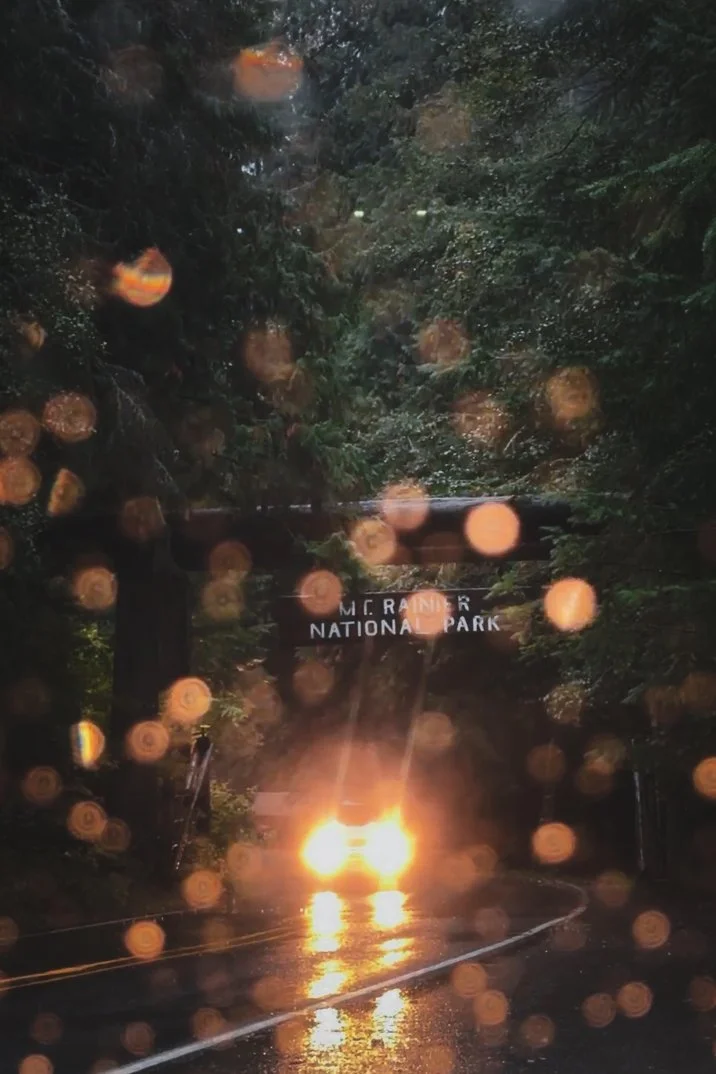
While I love being in the fog and clouds, it can also be freezing cold and terribly windy, with rain going sideways… and when that happens, it might be time to just go for a drive. From the warmth of your car, you can still watch the fog travel across the valley. Or you can quickly hop out at a waterfall, and then get back in your car. Or you can spot a marmot sitting by the road and you get to watch while staying nice and dry. Once you’ve had your fill of the park, you could also head to Ashford or Packwood for restaurants, lodging, etc.
A few final words:
All of these photos were taking in between June and early November.
Mount Rainier can be VERY snowy and the park does require chains beginning sometime in November through the Spring.
Before you make your trip to the park, check the weather, check park closures, and be prepared with the gear you need to be safe.
If you are making a trip to the Washington area specifically to see Mount Rainier, your best bet is late summer. My suggestion is give yourself a few days and some really flexible plans so you can adjust around the weather.
Mount Rainier is a truly stunning place and is absolutely worth seeing (in all weather!)
Happy Travels!